
There’s a quiet corner in every city where the sacred and the profane brush shoulders. In Dubai, where golden domes rise beside glass towers, some say the line between devotion and desire has never been thinner. You’ll hear whispers about massage girls in dubai-not just as service providers, but as modern-day priestesses in a system that demands silence, payment, and secrecy. These are not just bodies offering touch; they’re part of a ritual older than religion, shaped by scarcity, power, and the human need to be held, even if only for an hour.
The Holy Hour isn’t a church service. It’s a coded appointment. A locked door. A clock ticking down from sixty to zero. In this space, touch becomes prayer. Breath becomes incantation. The client doesn’t come for pain relief. They come because they’ve been told, in a hundred subtle ways, that their soul is cracked-and someone with soft hands and no judgment can stitch it back together, if only for a little while. Some call it a dubai happy massage. Others call it a transaction. But those who’ve sat in those dim rooms know it’s neither. It’s communion.
What Happens When Touch Becomes Sacred?
Across cultures, healing touch has always carried spiritual weight. In ancient Egypt, temple prostitutes performed rites to honor Hathor, goddess of love and fertility. In Japan, onsen attendants were once seen as conduits of purification. In Bali, healers use massage to release blocked energy, or selem. These traditions didn’t separate the physical from the divine-they merged them. Today, in hidden apartments across Dubai, the same logic persists. The body is not just flesh. It’s a vessel. The hands are not just tools. They’re instruments of release.
There’s no altar. No candles. No chanting. But there is silence. And that silence is the loudest prayer.
The Magic of Being Seen
Magic isn’t about spells or wands. Real magic is being seen-truly seen-without shame. For many who work in these spaces, the most powerful thing they offer isn’t the pressure of a thumb along the spine or the warmth of oil on skin. It’s the absence of judgment. A client walks in exhausted, broken, or numb. He doesn’t say, ‘I feel empty.’ He doesn’t say, ‘My wife left me.’ He doesn’t say, ‘I haven’t cried in three years.’ But his body says it all. And the person touching him doesn’t flinch. Doesn’t look away. Doesn’t ask for proof. Just holds space. That’s the real enchantment.
One woman, who asked to remain anonymous, told me: ‘I don’t give them sex. I give them back their dignity. For sixty minutes, they’re not a CEO, not a father, not a failure. They’re just a man who needs to feel human again.’
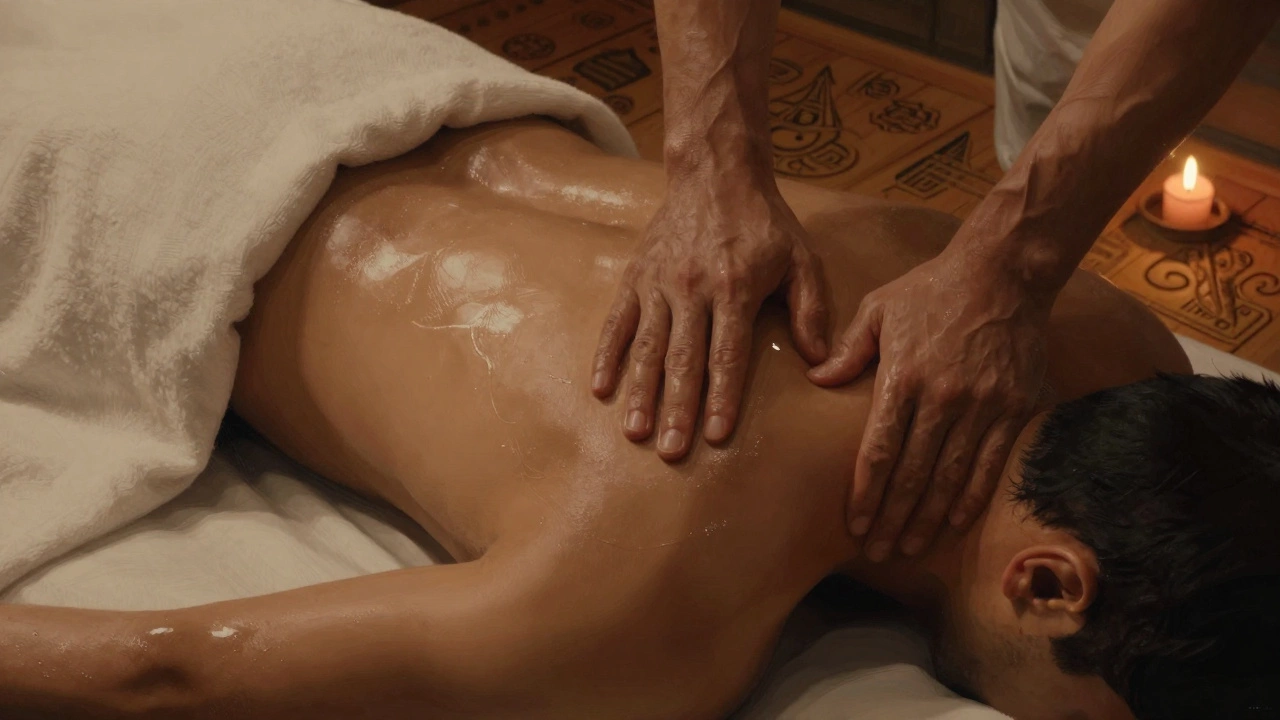
The Divine in the Transaction
Religion has long tried to control desire. But desire doesn’t obey doctrine. It finds its own temples. In Dubai, where public displays of affection are banned and relationships are tightly policed, intimacy becomes underground. And underground spaces breed ritual. The exchange of money becomes a sacrament. The hour becomes a liturgy. The act of paying isn’t degradation-it’s acknowledgment. It says: ‘I see your labor. I honor your presence. I will not pretend this doesn’t matter.’
Some clients leave gifts: a bottle of rosewater, a prayer bead, a note scribbled on hotel stationery. One man left a small statue of Saint Francis. Another left a vial of his mother’s perfume. These aren’t bribes. They’re offerings.
The Cost of the Holy Hour
There’s a price, of course. Not just the dirhams exchanged, but the silence that follows. The fear of being recognized. The way your name gets whispered in back rooms. The way your face becomes a rumor. Women who do this work are often labeled as fallen, broken, or desperate. But those labels are written by people who’ve never sat in the chair. Who’ve never held the hand of someone who hasn’t been touched in months.
The system doesn’t protect them. The law doesn’t recognize them. The church doesn’t pray for them. Yet they hold the line between loneliness and connection. They are the last priests of a dying kind of intimacy.
When the Hour Ends
At the end of the hour, the client gets dressed. The door opens. He walks out into the daylight. He might smile at the doorman. He might text his wife. He might go to work. But something inside him has shifted. He doesn’t know how to name it. He doesn’t know if he’ll ever come back. But he’ll remember the quiet. The warmth. The way his shoulders dropped for the first time in years.
And the woman? She wipes the oil from her hands. Lights a cigarette. Looks out the window. She doesn’t cry. She doesn’t celebrate. She just breathes. Because tomorrow, someone else will come. And the ritual will begin again.
There’s a myth that sex work is exploitation. But sometimes, it’s the only form of care left in a world that’s forgotten how to hold space. The massage with happy ending dubai isn’t about sex. It’s about surrender. About letting go. About being held-even if only for sixty minutes-by someone who doesn’t ask for anything but your presence.
What This Really Means
This isn’t a story about vice. It’s a story about absence. The absence of community. The absence of emotional safety. The absence of touch that doesn’t come with strings. When we call these women ‘prostitutes’ or ‘escorts,’ we erase their humanity. We turn them into symbols of sin instead of witnesses to suffering.
Maybe the real magic isn’t in the touch. Maybe it’s in the fact that, in a city built on wealth and control, someone still dares to offer a quiet hour of peace-and someone still dares to accept it.